Stop 9 of 20

Southern cemetery

Stop 9: Southern cemetery — The Park Promenade, Kalmar, Sweden

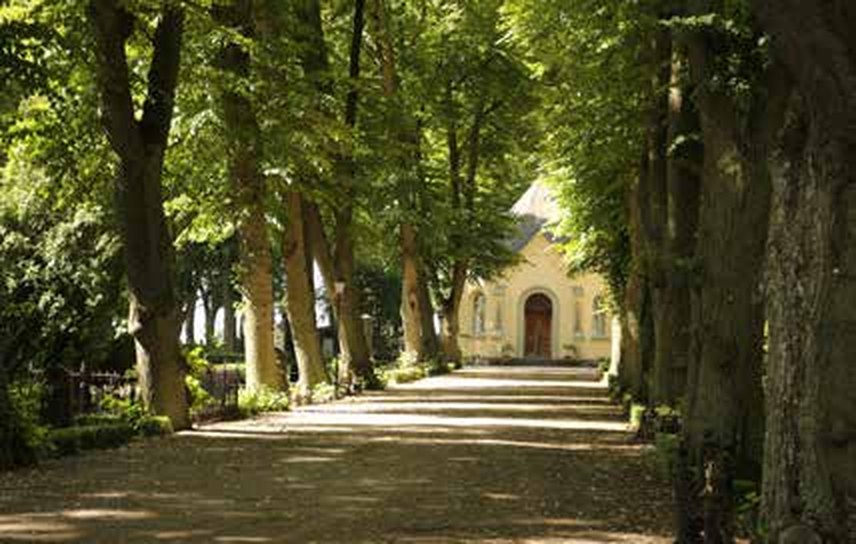
The 19th century's scientific revolution in understanding hygiene and the spread of disease led to the construction of cemeteries outside the cities. They were given a more park-like appearance than before so that they could also function as trails.

In connection with the planting of linden trees along Slottsvägen in 1862, linden trees were also planted in straight rows on the land area closest to the castle. Since there was no church nearby, a chapel was built and completed in 1863. The chapel was paid for by the city's Liquor Company, where Jeansson was the director — yes, the same Jeansson who bore the costs of the City Park's construction!

Good to know

+

Extra background — not part of the original printed guide.

  • Old cemeteries are important urban habitats: undisturbed soil, mature trees and lichen-rich stone make them refuges for insects, bats and rare lichens.
  • Swedish towns moved burials outside the church walls from the late 1700s onward, on public-health grounds — which is why so many town cemeteries date from that era.

On to the next stop

When you're ready, walk on with me to Bastionen Sankt Erik and Kalmarsundsparken. The view opens up beautifully out there.

Where you are

Waiting for location…