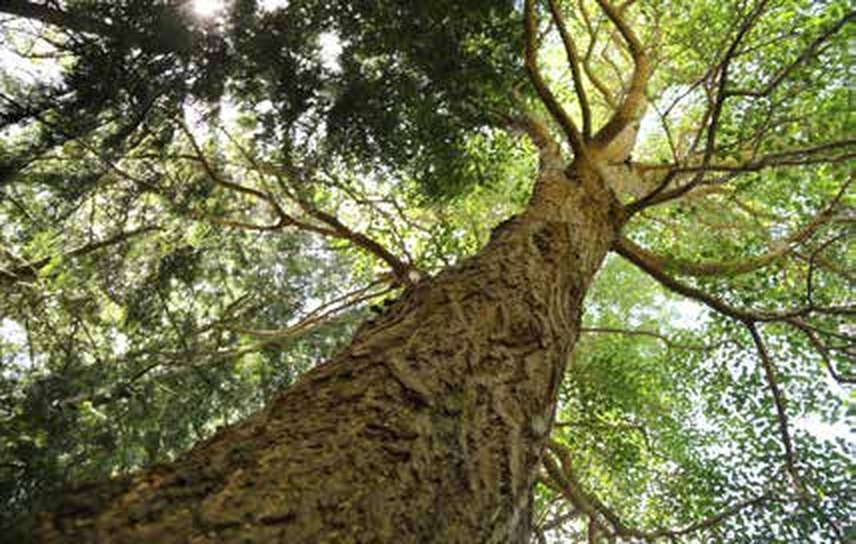
Behind the Vasa monument, among the conifers, in the middle of the corridor in the dark, a ginkgo — or a Chinese temple tree, as it is also called — stands there mysteriously. It is actually the oldest tree species known at all. There are ginkgo fossils that are 270 million years old. Ginkgo is one of the extremely resilient trees that even survived the Hiroshima atomic bomb.
Our ginkgo is said to be the oldest specimen in Sweden, planted around 1890. It is believed that some of these trees can live for 1500 years, so this tree may still have many wonderful years to come!
The festive thing about ginkgo is that it is neither a conifer nor a deciduous tree. Or maybe both, because if you look closely at the leaves — feel free to hold up a leaf to the sun — they look like glued-together needles!