Stop 3 of 20

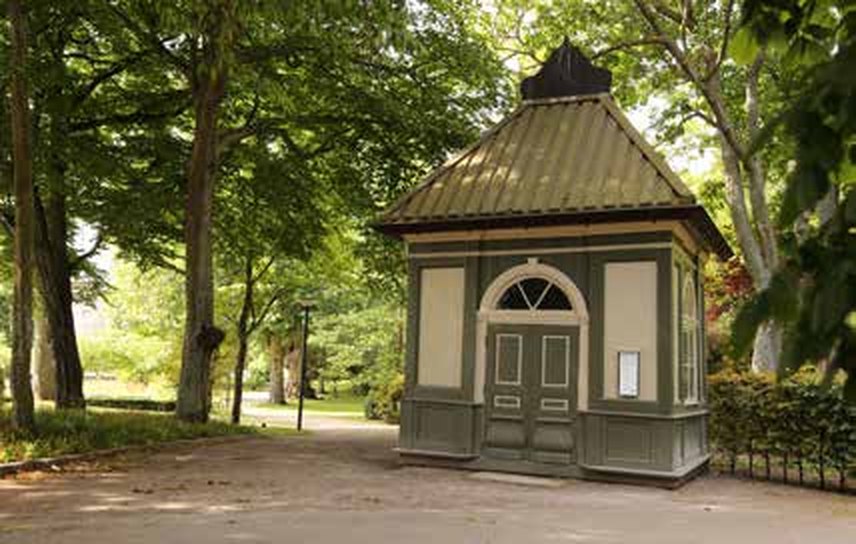
The gazebo

Stop 3: The gazebo — The Park Promenade, Kalmar, Sweden

The gazebo (Lusthuset) has not always stood in the park. It was originally built in one of Kalmar's oldest known gardens, which was located on Söderportsgatan, roughly where the southern cemetery is today. In the 18th century, there was a tobacco farm there. Later, one of Linnaeus' disciples, Johan Gustaf Wahlbom, lived there. He was probably the one who built the gazebo, and it was moved here in the early 20th century when the garden was demolished and villas and a cemetery were built in the area.

On the way to point 4, you pass tulip trees as well as southern beech and handkerchief trees. In 2022, the gazebo was moved to Skansparken, which you will find a little further along the trail at point 11.

Good to know

+

Extra background — not part of the original printed guide.

  • A lusthus (pleasure house) was a status symbol in Swedish town gardens: a small, often octagonal, unheated summer room used for coffee, cards and conversation.
  • The handkerchief tree (Davidia involucrata) was brought to Europe from China around 1900; its 'handkerchiefs' are not petals but large white bracts that protect the tiny flower head.
  • Tulip trees (Liriodendron) belong to the magnolia family and are among the tallest broadleaf trees of eastern North America.

On to the next stop

Come along with me now. Our next stop is the perennials and the elm — you'll notice the planting change as you get closer.

Where you are

Waiting for location…